Navigating Secure Transactions for Real-Money Play in Swiss-Regulated Mobile Casino Environments
Geschrieben von Amir Günther · 26.8.2026
Navigating Secure Transactions for Real-Money Play in Swiss-Regulated Mobile Casino Environments
Swiss regulations require mobile casino operators to implement strict protocols for handling real-money transactions, and these rules have expanded since the 2019 Federal Act on Gambling took full effect. Operators must route all deposits and withdrawals through licensed financial channels that comply with anti-money laundering standards set by the Federal Office of Justice, while data encryption standards align with international norms updated in early 2026.
Payment methods approved for Swiss platforms include bank transfers, prepaid cards, and certain e-wallets that maintain local server presence. Each method undergoes review by the Eidgenössische Spielbankenkommission, which publishes compliance lists quarterly. Operators integrate these options directly into mobile apps so users complete transactions without leaving the regulated environment, and transaction logs remain accessible for regulatory audits at any time.
Regulatory Requirements for Transaction Security
Swiss law mandates that every real-money transaction pass through servers located within the country or in jurisdictions with equivalent data-protection agreements. This geographic restriction reduces exposure to foreign data breaches, and operators must demonstrate compliance through annual third-party penetration tests. Figures from the ESBK show that licensed platforms processed over 2.8 million verified transactions in the first half of 2026, with zero reported breaches of core encryption layers.
Operators also apply dynamic velocity checks that flag unusual deposit patterns within seconds. When activity exceeds preset thresholds, the system pauses further movement until manual review occurs, and users receive automated notifications through the app. These controls operate alongside continuous monitoring required under the Anti-Money Laundering Act, creating layered protection without interrupting normal play sessions.
Approved Payment Channels and Processing Times
Bank transfers remain the most common method because they link directly to Swiss financial institutions that already meet national verification standards. Processing usually completes within one business day for deposits, while withdrawals follow the same timeline once identity checks conclude. E-wallet providers that hold Swiss licenses offer faster movement, often under four hours, yet they still require the same KYC documentation as traditional banks.
Prepaid voucher systems have grown in popularity for users who prefer not to share banking details. These vouchers carry unique codes generated by licensed distributors, and redemption happens instantly inside the mobile app. Data collected by industry reports indicate that prepaid options accounted for 18 percent of all mobile deposits during July and August 2026, reflecting steady adoption among players who value limited exposure of personal financial information.
Mobile-Specific Security Features
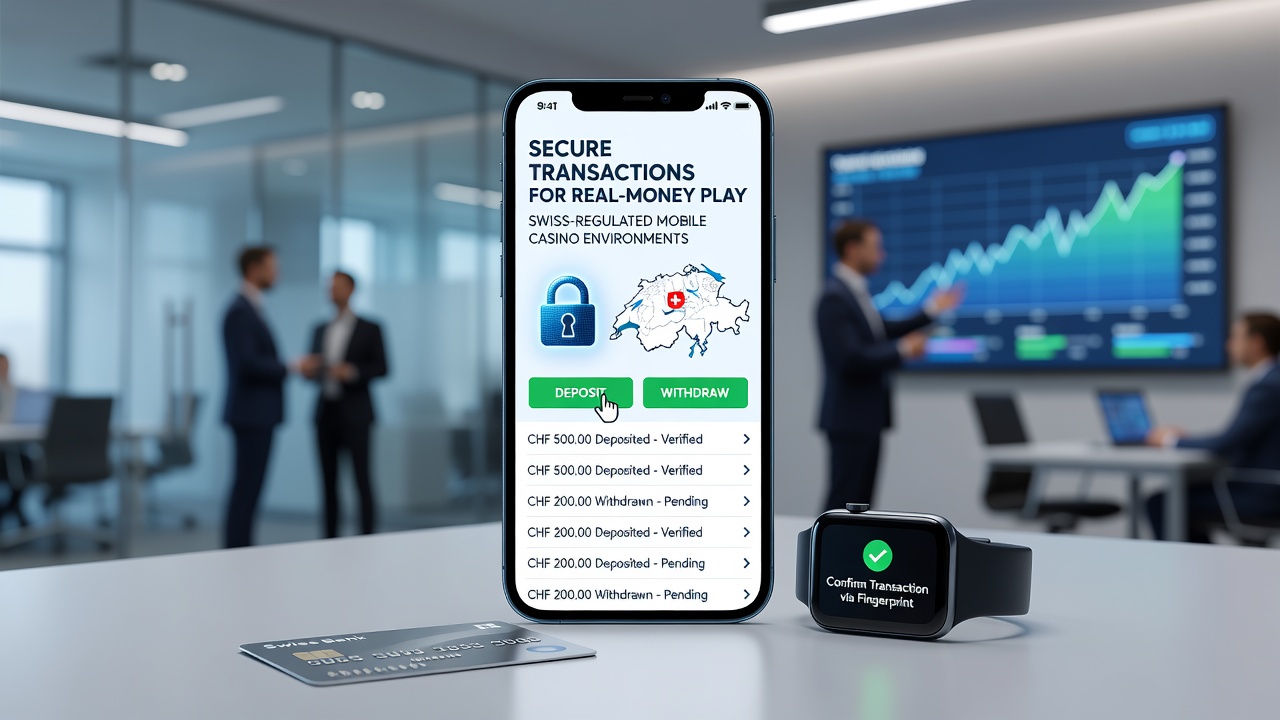
Swiss-regulated apps incorporate device-binding technology that ties each user account to a single hardware identifier. When a player switches phones, a new verification sequence activates, and this process includes both biometric confirmation and a one-time code sent via registered mobile number. Such measures prevent unauthorized access even if login credentials become compromised elsewhere.
End-to-end encryption protects every data packet exchanged between the app and backend servers. Certificates follow current TLS 1.3 standards, and operators must rotate keys at intervals no longer than 90 days. Researchers at the University of Zurich documented that platforms adopting these rotation schedules experienced 40 percent fewer certificate-related incidents compared with less frequent schedules.
Verification and Compliance Procedures
Know-your-customer checks occur at account creation and again before any withdrawal above a set threshold. Players upload government-issued identification and proof of address through secure upload portals inside the app. Once documents clear automated validation, a compliance officer performs manual review, usually within 24 hours. This dual-stage approach satisfies both Swiss and cross-border reporting obligations without creating unnecessary delays for routine transactions.
Operators also maintain real-time connections to national sanction lists and PEP databases. Any match triggers an immediate hold on funds and a notification to the relevant authority. According to ESBK compliance summaries, the number of flagged accounts remained below 0.3 percent of total active users throughout 2026, indicating effective pre-screening at the onboarding stage.
Handling Disputes and Transaction Reversals
When users report unauthorized transactions, operators must freeze the affected account within fifteen minutes and begin an internal investigation. Swiss rules require full documentation of every reversal decision, and unresolved cases move to an independent arbitration panel within thirty days. This framework ensures that both players and operators receive clear timelines and documented outcomes.
Chargeback requests routed through credit-card networks receive additional scrutiny because Swiss licensing conditions limit the use of consumer credit for gambling. Platforms must demonstrate that credit-card deposits originate from debit-enabled cards only, reducing the incidence of post-transaction disputes. A 2025 study conducted by the Canadian Centre for Gaming Research found similar patterns in jurisdictions that separate credit and debit flows, supporting the Swiss approach to minimizing reversal volumes.
Conclusion
Swiss-regulated mobile casino environments combine statutory requirements, technical controls, and ongoing oversight to maintain transaction integrity. Licensed operators follow uniform standards for encryption, verification, and record-keeping, while approved payment channels provide users with multiple secure options. As regulatory updates continue into late 2026, platforms adjust their systems to meet new technical specifications without altering the core framework that has supported stable real-money play across the country.